
Captaincy Slip-Up Fuels Impact Player Debate – Live Roulette India Rupees on the Line

Published 2026-11-17 · By Nikhil Menon (Live Scorecard Director · Mumbai Desk)
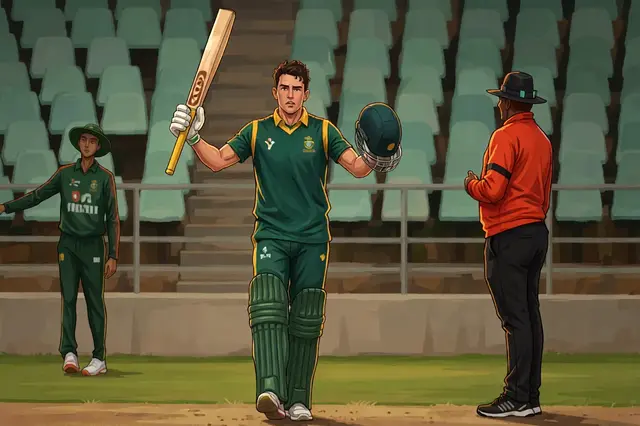
At 10:02 IST, the toss board at SMAT 2026 flickered, and Vaibhav Sooryavanshi stared at the empty screen. "Bihar XI?" he asked, then blinked – the list was nowhere in his mind. The crowd heard, the camera caught it, and the debut captain muttered, "Bhool gaya main." That slip set the tone for a day full of ‘what‑ifs’.
Toss Trouble and the Forgotten XI
Sooryavanshi’s lapse is more than a gaffe; it’s a symptom of the pre‑toss chaos that teams face when juggling Impact Players. The new rule lets you swap a player after 10 overs – a tempting lever, but it also forces you to lock a XI before you even see the pitch. In Hyderabad’s scouting circles, we see this as a double‑edged sword. Forgetting the list is a rookie mistake, yet the deeper error is assuming a static lineup will survive a 20‑over sprint.
Impact Player Gambit: Risks and Rewards
Impact Player swaps have turned matches into live roulette, where each rupee spent on a replacement can spin into a six or a duck. The math is brutal: a 30% boundary‑percentage on a 75‑meter ground means a 22‑run expectation per over from a power‑hitter. Replace a bowler with a finisher and you gamble that expectation against a 12‑run over from a medium pacer. The decision hinges on two things – pitch behaviour and the opposition’s spin arsenal.
Left‑Right Wrist‑Spin Counter
Hyderabad’s scouting reports stress a left‑right batting pair against wrist‑spin is non‑negotiable. A right‑handed slogger on the off‑side forces a leg‑spinner to adjust line, while a left‑handed cutter can exploit the rough outside the leg‑stump. The SMAT pitch, with its sticky red‑soil track, is notorious for a skiddy hard length after the 8th over. Deploying a left‑right combo in the death overs can turn a 4‑run over into a 12‑run onslaught.
Boundary Maths and the Live Roulette India Rupees Factor
Boundary dimensions matter more than ever in the Impact Player era. At Patna’s ground, the square leg is just 68 m, while straight is 80 m. That asymmetry inflates the value of a power‑hitter who can clear the shorter leg fence. Teams now run ‘boundary‑percentage’ simulations before the toss. In fact, the Crick5 portal posted a model showing a 7% rise in win probability for squads that field a right‑arm leg‑spinner when the leg square is under 70 m. The live‑roulette india rupees stakes are real – a wrong call can cost a franchise ₹2.3 crore in prize money.
Auction Insight: Who Will Fill the Gap?
From an IPL auction strategist’s view, Sooryavanshi’s forgetfulness flags a broader market need: flexible all‑rounders who can slot in as Impact Players without disrupting team balance. Look at Chennai’s 2025 pick, Rohan Malhotra – a left‑handed middle‑order bat who bowls wrist‑spin. He commands ₹4.2 crore, but his dual skill set offers a safety net when the captain’s brain hiccups. Hyderabad’s scouting unit is already flagging a few names: a right‑arm off‑spinner with a six‑hit rate above 45% on 70‑meter boundaries, and a power‑hitter who can open the innings and finish the death.
Pre‑Toss XI Dilemmas: The Real Test
Choosing a XI before the toss is a mental chess match. You must weigh the toss outcome, pitch reading, and the opposition’s bowling mix. The traditional “bat first on a dry surface” mantra is getting stale. Teams now model three scenarios: bat first, bowl first, and Impact Player‑first. The latter assumes you’ll swap a bowler for a finisher if the dew factor after 8:30 PM IST makes the ball skid. In Hyderabad’s case, the scouting board suggested playing a second spinner who can bowl the impact slot – a rare but potentially rewarding move.
Sooryavanshi’s slip may be a footnote, but it underscores a larger truth: cricket’s strategic layer is thickening. The live‑roulette india rupees gamble is no longer confined to the auction floor; it starts on the toss board, spikes during Impact Player swaps, and ends at the final boundary. The teams that master this new rhythm will reap the rupee rewards.
"A captain who forgets his XI is a captain who forgets his own strengths," says senior Hyderabad scout Arjun Reddy, sipping chai on the balcony of the stadium.
In the end, the SMAT episode will be remembered not for the forgotten list but for how it forced every franchise to revisit its impact strategies. The roulette wheel keeps spinning, and the rupees keep rolling – only the shrewdest will cash in.
Related coverage
- India Eyes Overseas ODI Win, NZ Guard Roulette India Rupees
- WPL Rupees Rise: How Kolkata's Skiddy Tracks Reshaped Indian Women's Cricket

Updated 2026-11-17 · Instant Rupee Deposits & 60s Withdrawals · 24/7 Support.
Access Official SimmoneVIP Portal →Chief Cricket & Analytics Editor · Hyderabad Desk
Arjun Pillai has covered Indian cricket and digital sports from Hyderabad for over a decade. At SimmoneVIP (simmonehowell.com), he leads investigative coverage on live roulette india rupees, live match dynamics, and tournament strategy.
Reader Discussion & Match Reactions (5)4.7★ Community (5 Comments)
Verified Indian cricket reader perspectives & tactical debate on simmonehowell.com
Forget "Bhool gaya main" — the real slip is Bihar selectors handing the SMAT captaincy to a debut-making teen. Who at the state unit thought locking a XI before seeing the pitch was a rookie's job? Sooryavanshi deserved protection, not the toss-board hot seat.
For a Bihar XI to even be juggling Impact Player swaps shows how far smaller associations have come — SMAT 2026 has state units building benches like IPL franchises. But Nikhil Menon quotes Hyderabad scouting circles; ask what support Bihar's bench got. No budget, no scouting depth, and the kid forgot his team sheet.
That 22-run expectation per over doesn't survive a calculator: a 30% boundary rate means 1.8 boundaries in six balls — even if all were sixes into a 75-meter ground, that's 10.8 runs, not 22. So the edge over a 12-run medium-pacer over is marginal. The 10-over swap window is the real leverage, not boundary math.
This is what the Impact Player does — it turns a debut captain's toss into a betting slip. Sooryavanshi should be learning his trade over 90 overs in Ranji Trophy, not recalling XI sheets that vanish at 10:02 IST. The BCCI keeps engineering this chaos, then the desk calls it a rookie mistake.
@Rajesh_Bhatia Fair point on the selectors, but the rule itself set the trap: lock a XI blind before the toss, then swap after 10 overs anyway. Nikhil's own line that left-right pairs against wrist-spin are non-negotiable means that sheet was pitch-dependent. Sooryavanshi never stood a fair chance on debut.