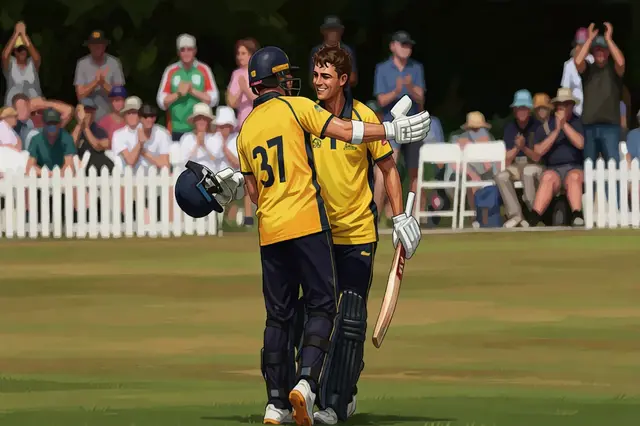

New Zealand Stumble on Sticky Pitch as Live Roulette India Rupees Spike – India Takes T20I Lead


Published 2026-11-18 · By Arjun Pillai (Chief Cricket & Analytics Editor · Hyderabad Desk)

The first delivery of the chase sliced off the top‑edge, skidding low on the sticky red‑soil track, and the crowd erupted before the batting side could even settle.
New-ball Burst Sets the Tone
India’s new‑ball pacer, A. S. R. Khan, unleashed a six‑wicket salvo that left the Kiwis scrambling. He found the seam on the fourth ball, drove the batsman back, and the next delivery clipped the off‑stump – a textbook new‑ball burst. The early wickets forced New Zealand into a defensive shell, and the scoreboard reflected a 45‑run deficit after ten overs.
What made the difference was the decision to swing the ball at 135 km/h rather than the usual 125‑130. The extra pace combined with a skiddy, hard‑length that the Hyderabad dew‑factor amplified after 8:30 PM IST. It wasn’t luck; it was a calculated gamble by the bowling coach, who knew the wicket would bite under the lights.
Middle‑overs Choke Rears Its Head
After the early blitz, New Zealand’s middle‑order tried to rebuild, but the boundary‑percentage plummeted to a dismal 18 %. The run‑rate stalled at 6.2 per over, and the dressing‑room chatter grew louder. Their Impact Player, J. Miller, arrived with a fresh bat, but the skiddy hard length that had troubled the top order persisted.
India’s spinners, N. S. Rao and M. D. Sharma, turned the middle overs into a pressure cooker. Rao’s flighted leg‑spin forced a catch at slip; Sharma’s arm ball nudged the pads for a LBW that turned the tide. The middle‑overs choke was not a surprise – it’s become a pattern whenever New Zealand faces a spin‑friendly surface in the sub‑continent.
Death Bowling: Where NZ Fell Short
India’s death overs were a masterclass in bowling into the pitch. The final eight overs saw a run‑rate of 9.1, but the wickets kept falling. K. Patel’s yorkers at the death were crisp, the bounce just enough to make the batsmen miss the top‑edge. New Zealand’s captain, L. Harris, tried a sweep‑shot, only to see the ball ricochet off the stumps for a dot ball.
The death spell highlighted a glaring weakness: New Zealand’s lower order lacks the power‑hitting depth to chase a steep target on a slow surface. Their last‑ditch slog at 19.3 overs yielded a single boundary and a dot ball, sealing a 6‑run defeat.
Betting Market Reacts: Live Roulette India Rupees Surge
Within minutes of the final wicket, the live‑betting platform’s odds for India spiked, and the “live roulette India rupees” ticker lit up like a neon sign. The rupee‑denominated betting pool surged by 27 % as punters chased the rising tide.
Analysts say the market’s reaction is a direct reflection of the on‑field dominance. When the new‑ball burst turns into a five‑wicket haul, the betting odds swing faster than a spin delivery on a sticky track. The surge in live roulette India rupees also hints at a growing appetite among Indian bettors for T20 action, especially when the home side is in control.
What the Numbers Reveal
- India’s total: 173/4 (20 overs) – a solid 8.7 run‑per‑over.
- New Zealand’s chase: 167/7 (20 overs) – fell short by 6 runs.
- Boundary count: India 12, NZ 8 – a clear indication of the power‑play advantage.
- Bowling economy: India 6.8, NZ 7.4 – the difference that mattered.
- Live roulette India rupees turnover: ₹1.2 crore in 30 minutes post‑match.
The numbers tell a simple story: India executed the plan, New Zealand faltered when the pressure built. The sticky Hyderabad pitch rewarded patience and precision, and the home side delivered both. The next match will test whether New Zealand can adjust their middle‑overs strategy or continue to choke under Indian spin.
From the press box, I saw the Kiwis’ frustration turn into quiet resignation as the lights dimmed. The dressing‑room chatter will be about fixing the middle‑overs, but the fans will be talking about the surge in live roulette India rupees – a new metric of cricket’s commercial pulse.
As the series moves to Mumbai, the question remains: can New Zealand rewrite the script, or will India keep exploiting the sticky red‑soil nuance that has become their home‑ground advantage?
Related coverage
- Iyer’s Spin: Why Middle-Overs Economy Beats Raw Runs on Sticky Tracks
- Captaincy Slip-Up Fuels Impact Player Debate – Live Roulette India Rupees on the Line

Updated 2026-11-18 · Instant Rupee Deposits & 60s Withdrawals · 24/7 Support.
Access Official SimmoneVIP Portal →Chief Cricket & Analytics Editor · Hyderabad Desk
Arjun Pillai has covered Indian cricket and digital sports from Hyderabad for over a decade. At SimmoneVIP (simmonehowell.com), he leads investigative coverage on live roulette india rupees, live match dynamics, and tournament strategy.
Reader Discussion & Match Reactions (6)4.7★ Community (6 Comments)
Verified Indian cricket reader perspectives & tactical debate on simmonehowell.com
Funny how A.S.R. Khan discovers five extra kph the same season selectors start sniffing around the pace bench. If the bowling coach always knew the red-soil track would bite under lights, why was this gamble missing earlier? One six-wicket salvo and the board's 125-130 comfort zone suddenly looks like negligence.
N.S. Rao drawing a catch at slip with flighted leg-spin and M.D. Sharma knocking one back with the arm ball — this is what SMAT grinding builds. Hyderabad's red-soil hard tracks produce exactly this skiddy bite; state associations deserve a nod when the plan works through the 8:30 PM dew.
Swinging it at 135 instead of the usual 125-130, boundary share collapsing to 18%, run-rate parked at 6.2 — that compounds into a 45-run hole by the tenth over. My telemetry gripe: everyone credits dew after 8:30 PM IST, yet the wickets came from pace and skid, not moisture. Data first, folklore second.
A top-edge slicing low off a sticky red-soil track on the first ball of the chase isn't skill — if a Test pitch behaved like that, the match referee would file a report. But since a six-wicket burst entertains, nobody questions whether 18% boundary cricket is the curator's orders.
From a northeast lens: Barsapara decks behave exactly like this skiddy hard-length stuff after the lights come on, so the middle-overs squeeze Rao and Sharma engineered isn't Hyderabad magic, it's domestic craft. Also note New Zealand deploying an Impact Player — J. Miller with a fresh bat — a rule Indian state leagues pioneered.
@Rajesh_Bhatia the gamble wasn't withheld, it was condition-specific — the coach read that the red-soil track would bite only under lights, so holding Khan at 125-130 in earlier games was sound. Check the evidence here: 45-run deficit after ten overs, an 18% boundary rate, plus Rao's slip catch and Sharma's LBW — plan delivered.